
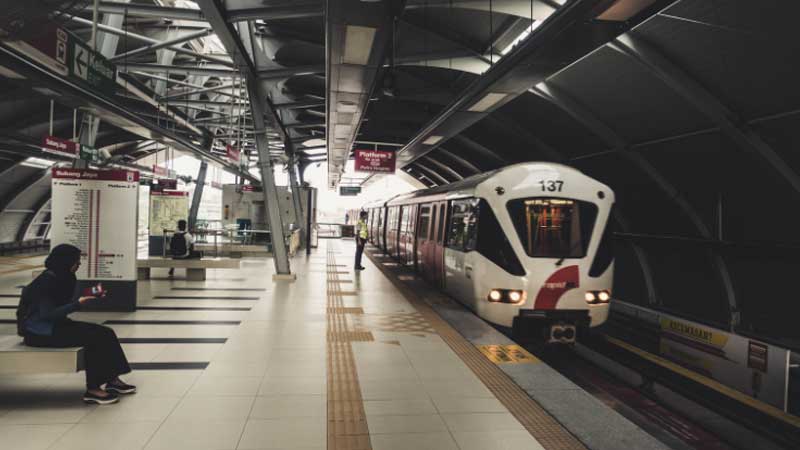
Public transport is meant to feel routine. But for many passengers, especially women, that sense of normalcy is increasingly being replaced by concern.
Reports from The Guardian revealed that incidents of violence against women on UK trains rose by 50% in 2024, highlighting a troubling shift in passenger safety. The situation has not improved.
Building on this, data from London City Hall shows that in 2025, British Transport Police recorded nearly 4,600 violence against women and girls offences, alongside 1,724 hate crimes across the network.
These figures point to more than isolated incidents. They reflect a growing pattern that affects both passengers and frontline staff. As expectations around safety evolve, transport systems are under increasing pressure to respond with solutions that are not only reactive, but preventive.
TL; DR
- Violence and harassment on public transport are rising, highlighting urgent security gaps.
- Body cameras help deter aggressive behavior by increasing accountability in real time.
- Recorded footage supports victims and strengthens legal action with reliable evidence.
- Live streaming features enable faster response from security teams during incidents.
- Adopting body cameras improves staff confidence and builds public trust in transport systems.
How Body Cameras Improve Transport Security In Practice
Rising incidents across public transport networks are not just a passenger concern. They create real operational pressure for staff who are expected to manage unpredictable situations with limited support. Delayed responses, lack of clear evidence, and escalating conflicts make it harder to maintain control in high-risk moments.
This is where body cameras shift the approach. Instead of acting as a standalone tool, they become part of a broader safety system. By combining real-time visibility, recorded evidence, and direct communication with control teams, body cameras help transport organisations move from reactive handling to proactive risk management.
1. Enhancing Staff Confidence and Safety
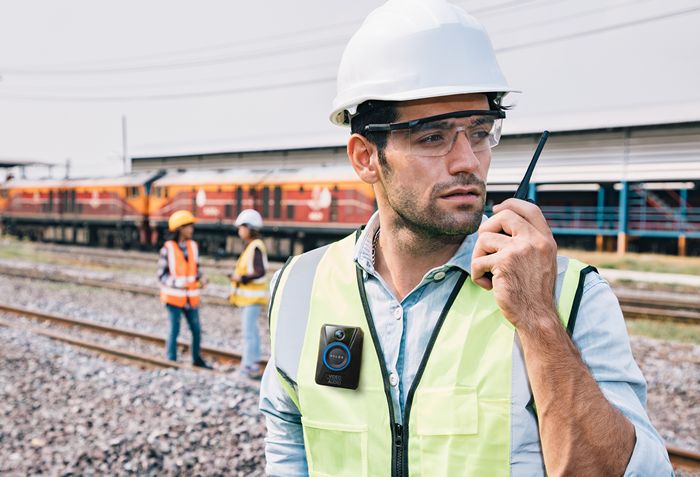
Transport staff often find themselves on the frontlines, mediating disputes and ensuring passenger safety. Body cameras provide a sense of security, enabling staff to perform their roles confidently, knowing that their interactions are being recorded. This not only acts as a deterrent to potential aggressors but also provides staff with evidence in the event of an incident.
2. Deterring Violent Behavior
The mere presence of body cameras has been shown to reduce aggressive behaviour. When individuals know they are being recorded, they are less likely to engage in confrontational or violent actions. This preventive aspect is crucial in environments like trains and stations, where tensions can escalate quickly.
3. Supporting Victims and Ensuring Justice
In cases where violence does occur, body camera footage serves as an unbiased account of events. This evidence is invaluable for supporting victims, ensuring accountability, and assisting law enforcement in their investigations. Accurate documentation helps to build stronger cases and contributes to a fairer justice process.
4. Strengthening Public Trust
By adopting body cameras, transport organisations signal their commitment to passenger and staff safety. This proactive approach fosters trust among passengers, reassuring them that their welfare is a priority. Transparency and accountability are powerful tools in rebuilding confidence in public transport.
5. Enabling Real-Time Response
With advanced features like live streaming, body cameras allow transport staff to connect with security teams in real time. Immediate access to on-the-ground footage enables quicker decision-making and faster deployment of assistance when needed.
What To Look For In An Effective Body Camera Solution
Not all body cameras deliver the same level of impact. For transport environments, where situations can escalate quickly and unpredictably, the effectiveness of the solution depends on how well it supports both real-time response and post-incident processes.
A reliable system should include:
- Real-time live streaming to enable immediate support from control rooms.
- Secure cloud storage to ensure footage is safely recorded and easily accessible.
- Automatic uploads to reduce manual handling and prevent data loss.
- Multi-view capabilities to provide broader situational awareness during incidents.
- Strong data protection measures to meet compliance and privacy standards.
Pro Tip: Solutions that combine these capabilities go beyond basic recording. They actively support faster decision-making, stronger accountability, and more coordinated incident management across transport networks.
This is where HALOS body cameras align with operational needs. Designed for high-pressure environments, they integrate advanced features such as automatic uploads, multi-view live streaming, and robust data security into a single, dependable system. The result is a solution that not only records incidents but helps organisations respond with greater clarity and confidence.
Closing Thoughts
The statistics highlighted in The Guardian and BBC News articles are a wake-up call for the transport sector to act decisively. Body cameras offer a practical, effective solution to enhance safety, deter violence, and support victims. By integrating this technology, transport organizations can lead the way in creating safer journeys for all.
As Katie Roberts, Project Manager at West Midlands Trains, puts it: “HALOS body cameras are the future of our security solutions. Their cloud-based storage and fast deployments have significantly upgraded our requirements.”
At HALOS, we are committed to partnering with industries to implement innovative safety solutions. Our range of body cameras is designed to meet the specific needs of transport staff, with features like automatic uploads, multi-view live streaming, and robust data security.
Let’s work together to make public transport a place where everyone feels safe and protected. Contact us today to learn more about how HALOS body cameras can help your organisation foster safer, more secure journeys.
Frequently Asked Questions
Are body cameras effective in reducing violence on public transport?
Yes. The visible presence of body cameras can discourage aggressive behavior, as individuals are less likely to act when they know they are being recorded. This makes them a practical tool for prevention as well as incident management.
How do body cameras support transport staff during incidents?
Body cameras provide real-time visibility and recorded evidence, allowing staff to handle situations with greater confidence. Features like live streaming also enable faster support from control teams when incidents escalate.
Is body camera footage legally admissible?
In most cases, yes. Footage captured by body cameras can be used as evidence in investigations, provided it is stored and handled in line with data protection and legal requirements.
Do body cameras raise privacy concerns for passengers?
Body cameras must comply with strict data protection regulations. When used responsibly, with clear policies on recording and data storage, they balance safety needs with passenger privacy.