

Evidence Management for Law Enforcement: Why Digital Systems Are Now Essential
Law enforcement agencies are managing more evidence than ever before. From body camera footage and dashcam recordings to mobile phone data and surveillance video, the volume and complexity of evidence continue to grow at a rapid pace.
At the same time, expectations around transparency, accountability, and compliance are higher than ever. Courts demand a reliable chain of custody. Communities expect accurate documentation. Internal teams need faster access to critical information.
This is where modern evidence management for law enforcement becomes a strategic priority rather than an operational afterthought. Agencies that still rely on fragmented, manual processes are increasingly at risk of inefficiencies, compliance gaps, and lost evidence.
TL;DR
- Law enforcement agencies are handling more digital evidence than ever, making manual processes harder to manage effectively.
- Traditional evidence management often leads to delays, limited visibility, human error, and compliance challenges.
- Digital evidence management systems help agencies improve efficiency, security, and chain-of-custody control.
- Police evidence management software makes it easier to store, organize, search, and retrieve critical evidence.
- Integrated body camera and software platforms create a more reliable, scalable, and future-ready evidence workflow.
What Is Digital Evidence Management?
Digital evidence management refers to the centralized handling of all types of evidence, especially digital assets, within a secure, structured system.
A modern police digital evidence management solution allows agencies to:
- Collect evidence from multiple sources such as body cameras, dashcams, and mobile devices
- Automatically upload and store files in a secure cloud or server environment
- Organize evidence using metadata, case numbers, timestamps, and tags
- Track every interaction through audit trails
- Control access based on user roles and permissions
Unlike traditional methods, digital systems are designed to manage high volumes of data efficiently while maintaining strict compliance with legal and departmental standards.
This approach transforms evidence management from a manual process into a streamlined, technology-driven workflow.
Key Benefits of Digital Evidence Management
Digital evidence management brings structure, speed, and control to how agencies handle critical information. It replaces manual processes with secure, automated workflows that improve efficiency and accountability.
Improved Efficiency Across Operations
Digital systems reduce the administrative burden on officers and evidence teams. Evidence can be uploaded automatically, categorized instantly, and retrieved in seconds.
This eliminates repetitive tasks and allows personnel to focus on higher-value responsibilities such as investigations and case preparation.
Stronger Security and Data Protection
Modern systems use encryption, secure access controls, and detailed audit logs to protect sensitive data.
Every action taken on a piece of evidence is recorded, ensuring full accountability. This significantly reduces the risk of unauthorized access or tampering.
Enhanced Compliance and Chain of Custody
Maintaining a defensible chain of custody is critical in law enforcement. Digital platforms automatically log every interaction, from collection to courtroom presentation.
This ensures that evidence remains admissible and can withstand legal scrutiny.
Faster Access to Critical Information
Investigators can quickly search and retrieve evidence using keywords, timestamps, or case identifiers.
Instead of manually sorting through files or storage units, teams can access what they need in real time, improving case resolution timelines.
Scalable Storage for Growing Data
Digital evidence continues to grow, especially with widespread use of video recording devices.
A centralized system provides scalable storage solutions that adapt to increasing data volumes without compromising performance or accessibility.
Pro Tip: Choose a digital evidence platform with automated tagging and audit trails to save time while strengthening security and compliance.
The Role of Police Evidence Management Software
At the core of digital transformation is police evidence management software. This technology acts as the backbone of modern evidence workflows.
A robust platform offers several critical capabilities:
Centralized evidence repository
All digital evidence is stored in one secure location, eliminating silos and ensuring consistency.
Automated workflows
From evidence upload to categorization and retention scheduling, automation reduces manual effort and improves accuracy.
Advanced search and retrieval
Officers can locate evidence quickly using filters, tags, and metadata.
Audit trails and reporting
Comprehensive logs provide a clear record of every action, supporting internal reviews and legal processes.
Role-based access control
Permissions ensure that only authorized personnel can view or modify specific evidence.
By implementing police evidence management software, agencies gain control over their data while improving operational efficiency and compliance readiness.
Integration with Body Cameras and Digital Tools
One of the most significant advancements in evidence management for law enforcement is the integration of software platforms with body cameras and other digital tools.
Body-worn cameras generate large volumes of high-value evidence. Without a connected system, managing this data can quickly become overwhelming.
Integrated ecosystems streamline the entire process:
| Feature | Description |
|---|---|
| Automatic Evidence Capture & Upload | Body camera footage uploads directly to the system without manual steps |
| Real-Time Synchronization | Data from bodycams, dashcams, and mobile units is unified in one platform |
| Consistent Metadata Tagging | Evidence is auto-labeled with officer ID, location, timestamp, and more |
| Simplified Case Management | All case-related evidence is linked and accessible from a single interface |
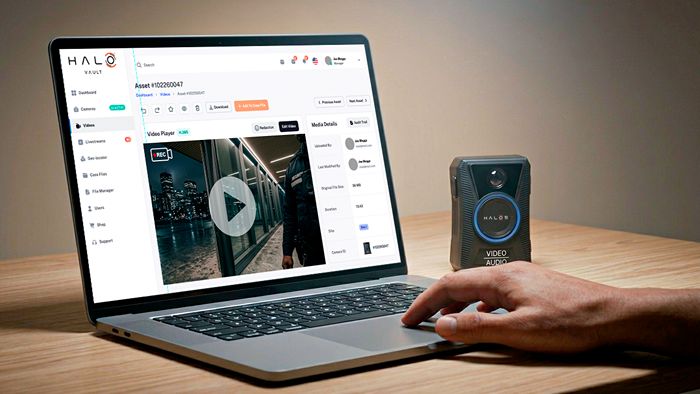
Solutions aligned with platforms like HALOS Body Cams demonstrate how tightly integrated hardware and software can create a seamless evidence workflow.
This level of integration not only improves efficiency but also strengthens the reliability and integrity of evidence.
Pro Tip: Start with a pilot rollout in one unit to refine workflows and ensure smoother department-wide adoption.
The Future of Evidence Management Is Digital
The shift toward digital systems is redefining how law enforcement agencies manage evidence. As data volumes increase and accountability standards rise, traditional methods simply cannot keep pace.
Modern evidence management for law enforcement offers a smarter, more secure, and more efficient way to handle critical information. It enables agencies to strengthen compliance, improve operational efficiency, and build greater trust with the communities they serve.
Agencies that invest in police digital evidence management and integrated ecosystems today will be better positioned to handle the challenges of tomorrow.
Wrapping It Up!
If your department is ready to modernize its approach to evidence, now is the time to act.
Discover how a unified platform combining body cameras and police evidence management software can transform your workflows, improve accountability, and support better outcomes across your operations.
Request a demo today and see how digital evidence management can work for your agency.
Frequently Asked Questions
What is evidence management for law enforcement?
Evidence management for law enforcement is the process of collecting, storing, organizing, tracking, and retrieving physical and digital evidence in a secure and compliant way. Modern systems help agencies maintain a chain of custody, improve access, and reduce administrative burden.
Why is digital evidence management important for police departments?
Digital evidence management is important because law enforcement agencies now handle large amounts of video, audio, and file-based evidence. A digital system improves security, speeds up retrieval, supports compliance, and reduces the risk of lost or mishandled evidence.
What does police evidence management software do?
Police evidence management software centralizes evidence in one secure platform. It can automate uploads, apply metadata tags, track user activity, control access, and make it easier for officers and investigators to find and manage case-related evidence.
How do body cameras support digital evidence management?
Body cameras support digital evidence management by capturing footage in the field and feeding it into a connected evidence platform. When integrated properly, they help automate uploads, improve documentation, and ensure evidence is linked to the right case information.